Targeted review
Screen specific raised transitions for a potentially focused treatment.

Commercial Service · Los Angeles
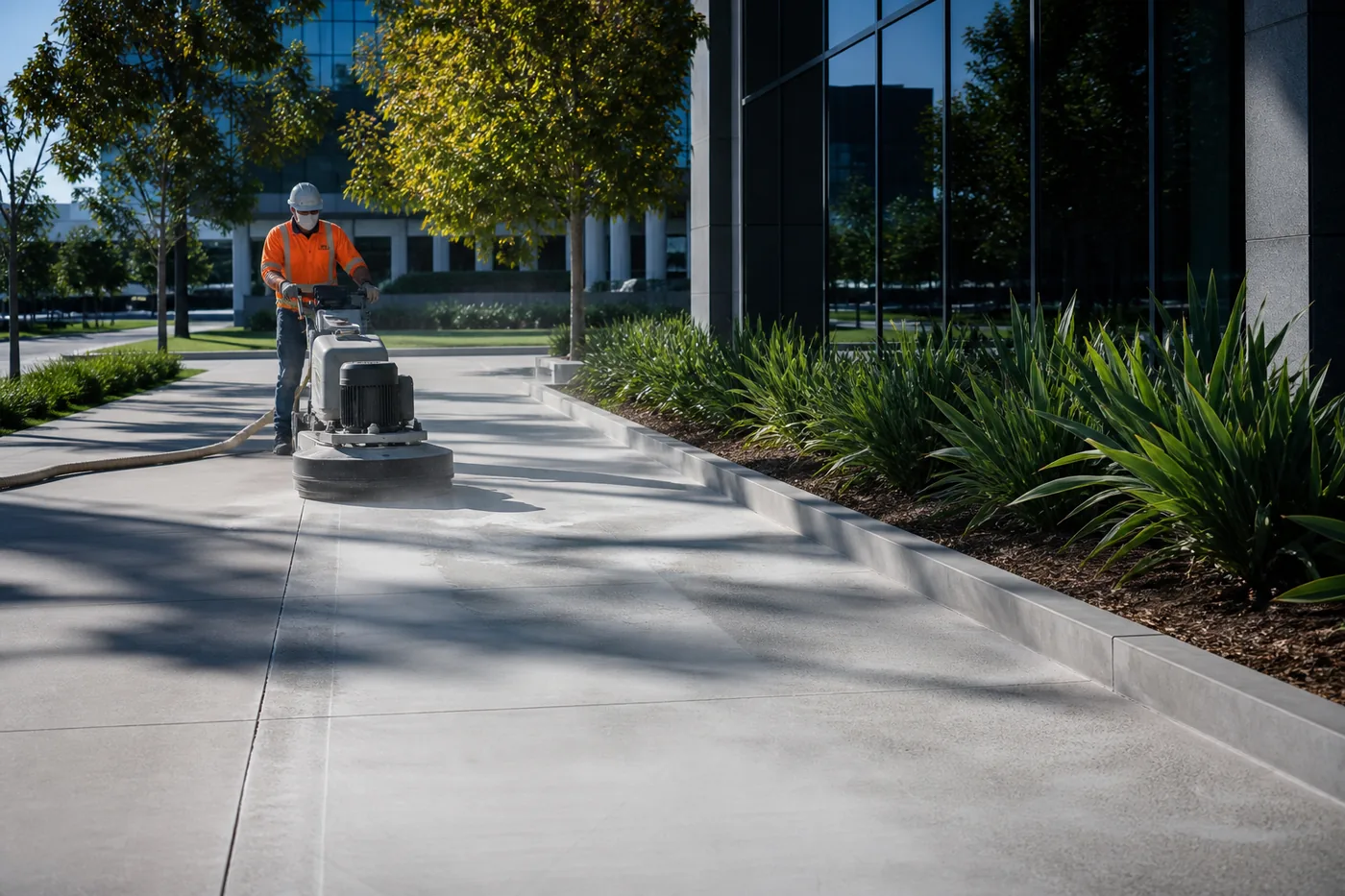
Sidewalk grinding may be considered for certain raised concrete transitions where the surface condition and site context make it an appropriate option. Commercial Pavement Group helps commercial property teams discuss grinding within a broader maintenance strategy.
The commercial challenge
Commercial walkways can contain many types of elevation changes, surface defects, and deterioration. Grinding addresses the surface, so the underlying condition and the amount of material involved remain important considerations.
Large properties also require attention to work-zone organization, pedestrian routing, dust control expectations, and the sequence of work.
Service approach
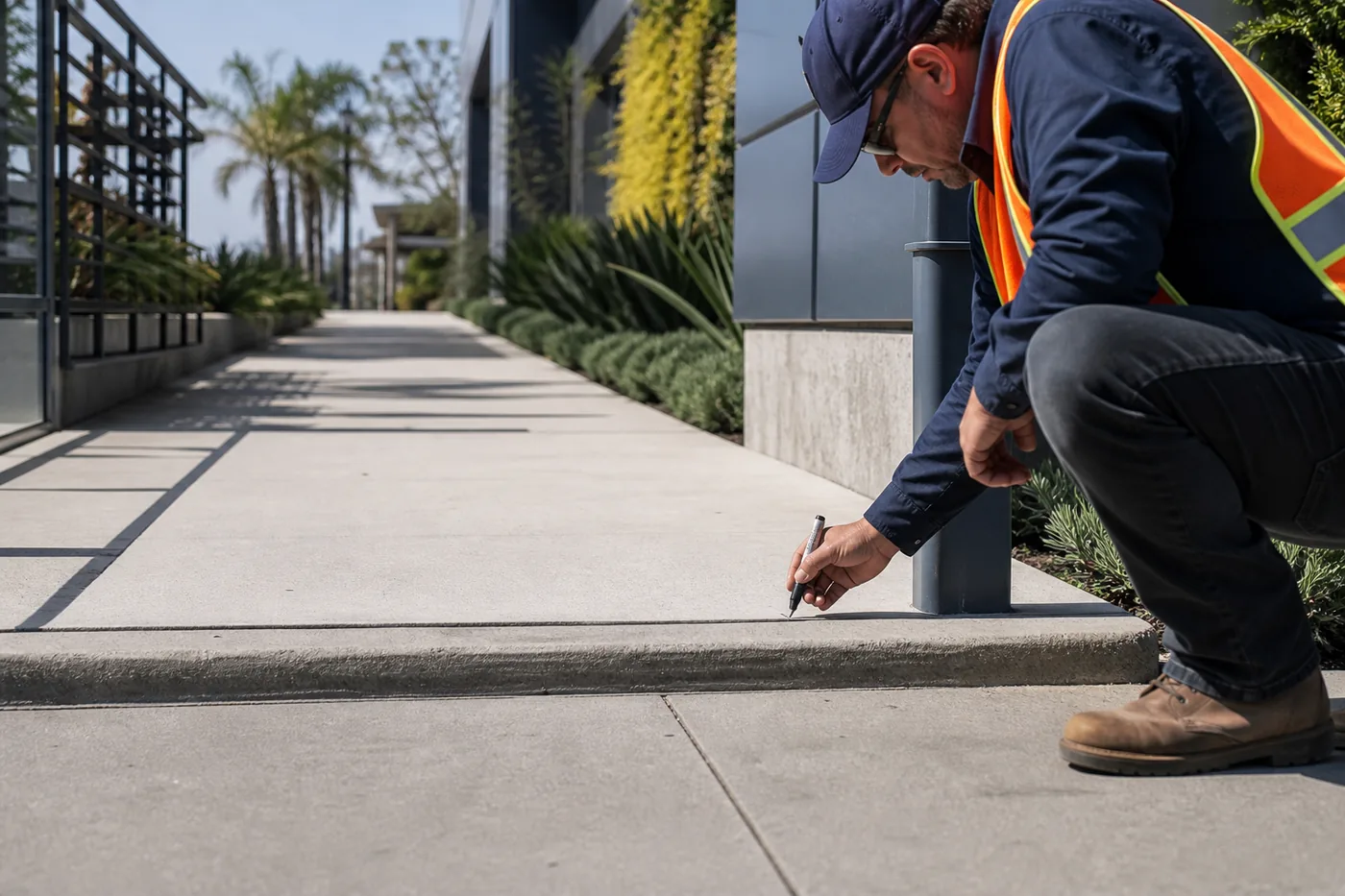
A site conversation should establish where transitions occur, how the route is used, the condition of the concrete, and whether a surface correction is suitable. Equipment, depth, and technical method details are not stated until company capabilities and site needs are confirmed.
Where grinding is appropriate, it can become part of a focused hazard-mitigation or broader sidewalk-maintenance discussion.
Commercial priorities
The value of the work depends on the actual property condition, chosen approach, and confirmed scope—not unsupported guarantees.
Screen specific raised transitions for a potentially focused treatment.
Plan around pedestrian routes and active-property conditions.
Connect isolated surface concerns to a larger walkway program.
Avoid assuming grinding is appropriate for cracked, unstable, or unsuitable concrete.
Who this serves
Large-scale commercial sidewalk grinding may involve many documented locations, but every transition still requires an individual suitability review before a method is selected.
Review trip-hazard planning considerationsRelated commercial services
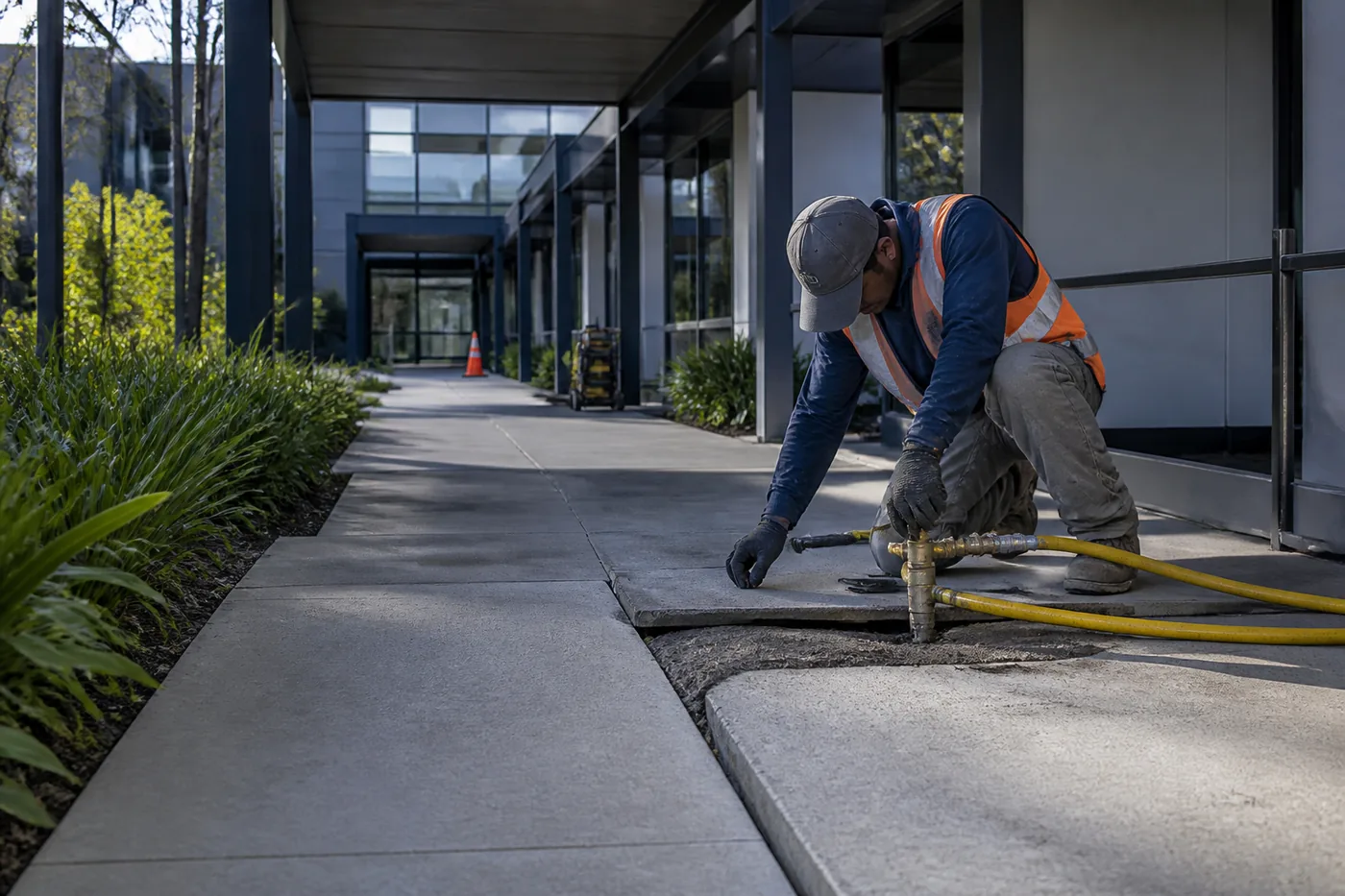
Commercial walkway conditions often overlap. These related services provide useful next steps without assuming the same method applies everywhere.
Los Angeles commercial focus
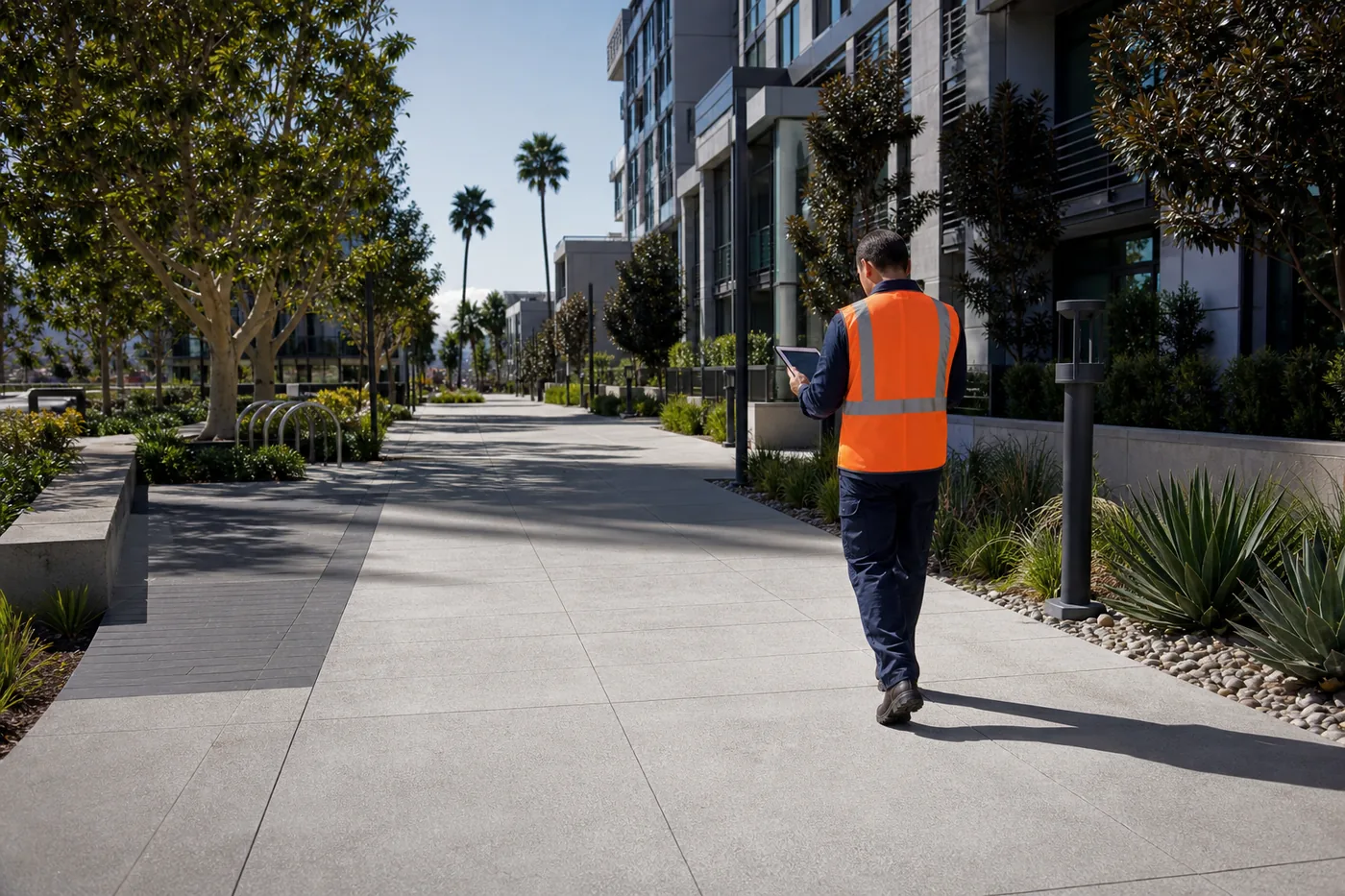
Los Angeles commercial sites balance heavy pedestrian use, visible public interfaces, accessibility, property operations, and diverse stakeholders. Project discussions should reflect that local context without making unverified claims about surrounding service areas.
Service FAQ
These answers provide general project guidance. Pricing, methods, scheduling, availability, and technical recommendations require a direct discussion.
It may be discussed for certain raised surface transitions when the concrete condition and site context appear suitable. An evaluation is necessary before selecting the method.
No. Significant damage, movement, cracking, or other conditions may call for a different approach. No method should be assumed from photographs or keywords alone.
Yes. Property teams can organize multiple locations for a commercial maintenance conversation. Final scope, method, and service availability must be confirmed.
Discuss the property
Share the property type, location, observed condition, and available project information with Commercial Pavement Group.