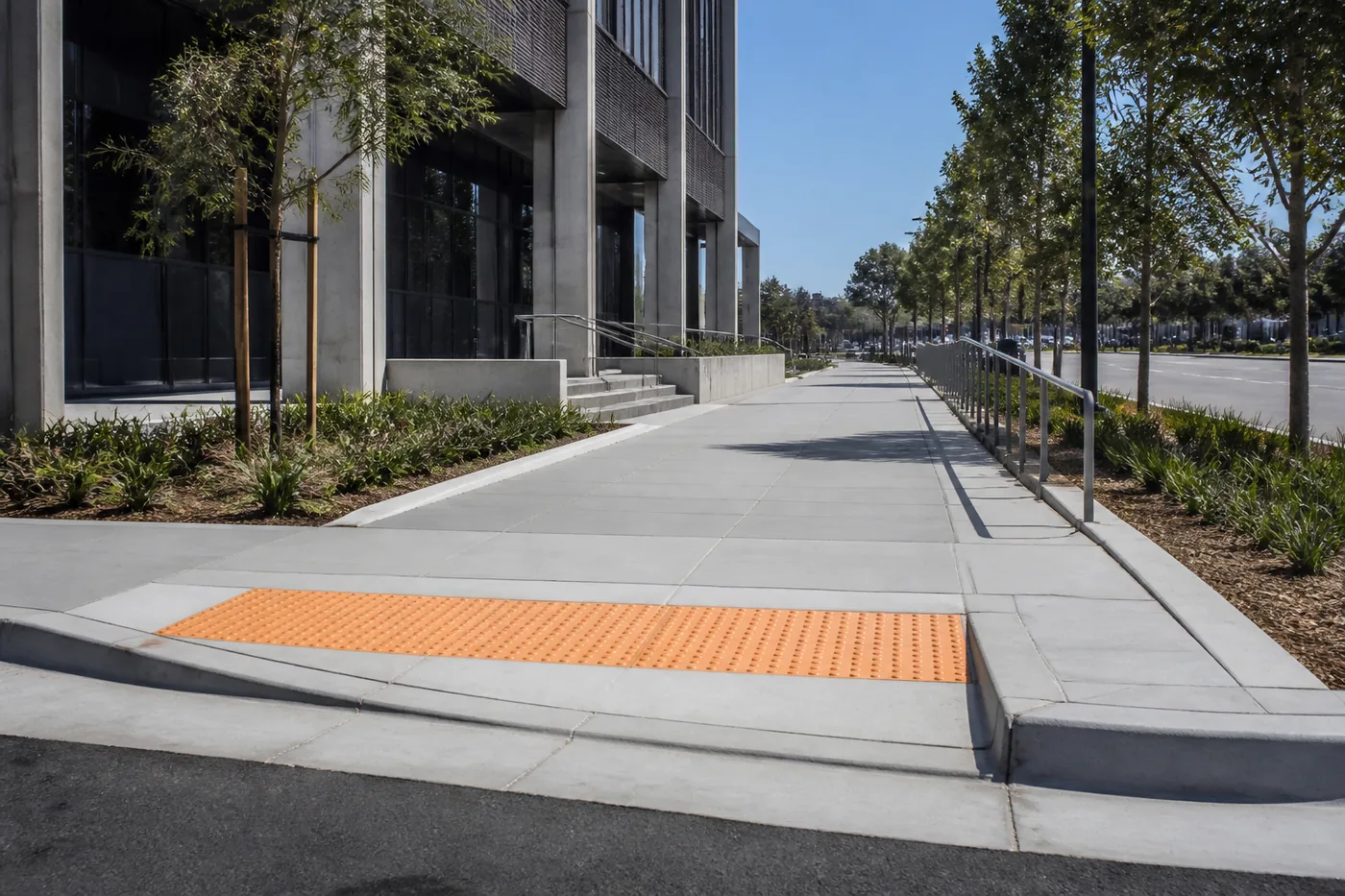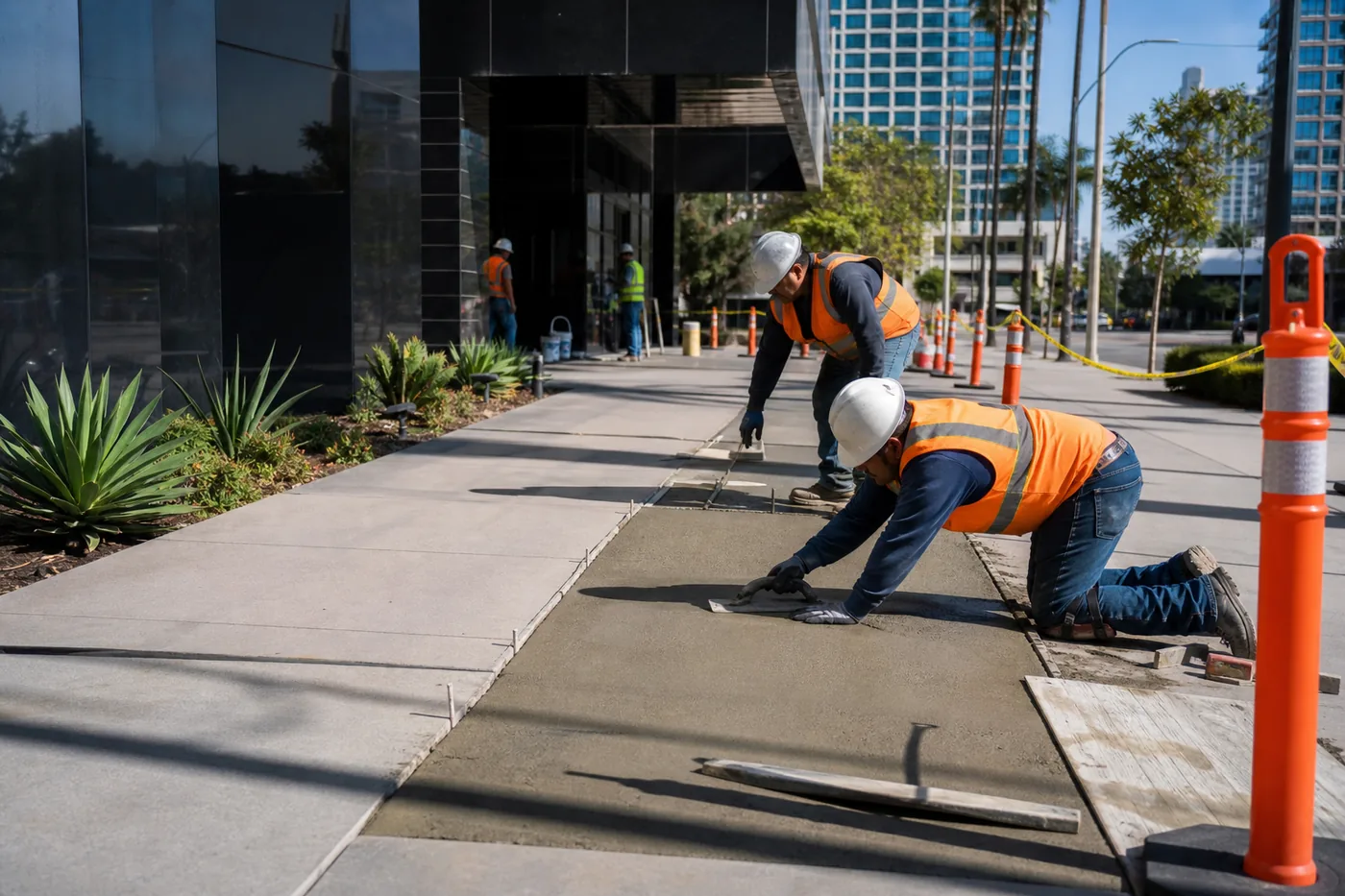
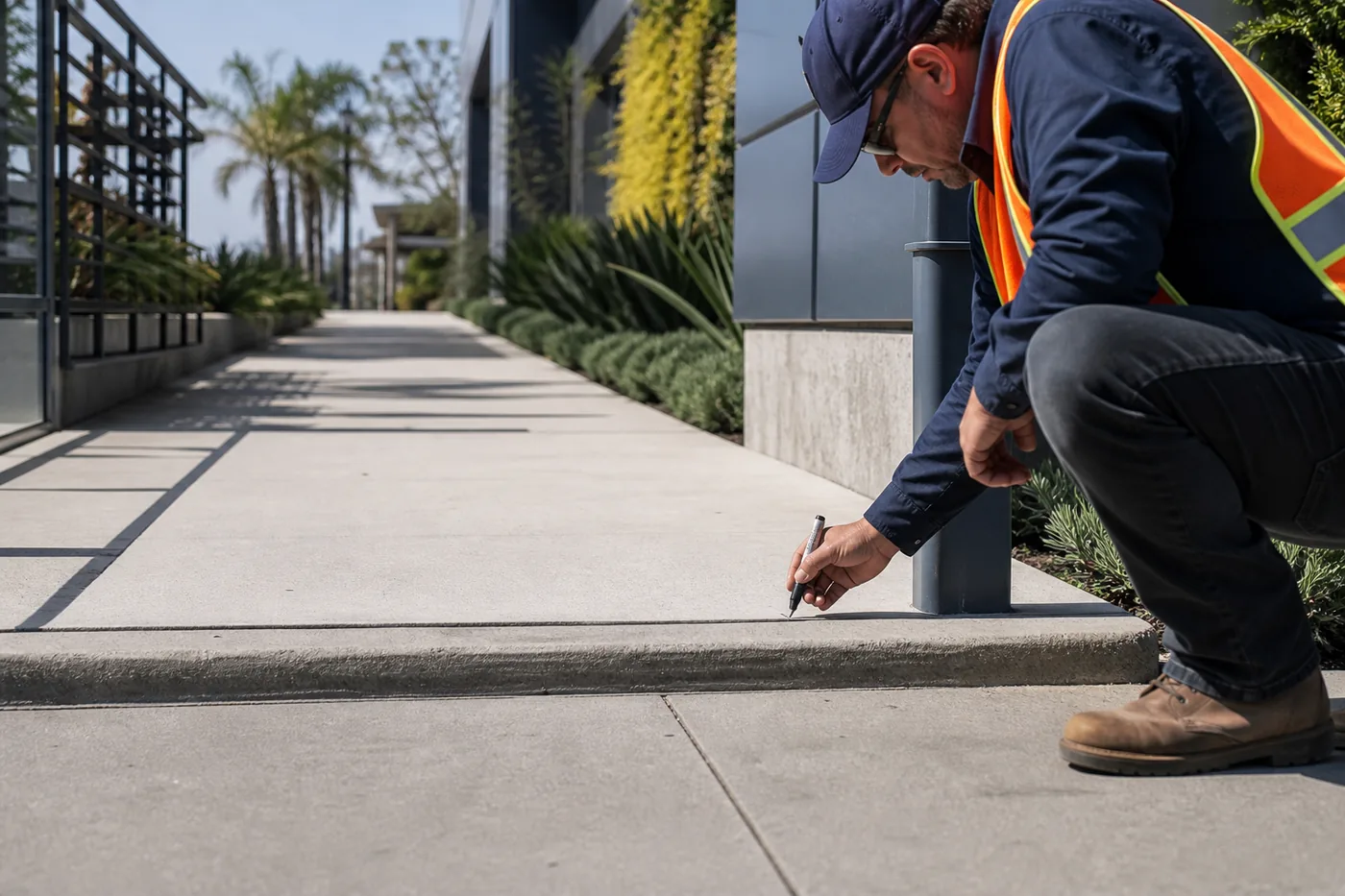
A commercial trip hazard is commonly understood as a walking-surface condition that can interrupt a person’s normal path of travel. Raised concrete edges, settled slabs, broken corners, holes, deteriorated surfaces, and abrupt transitions are examples of conditions that may deserve attention. Whether a particular condition creates a legal issue or requires a specific response depends on facts this article cannot determine.
For property managers, the practical question is not merely whether a surface looks imperfect. It is how the condition affects an active pedestrian route, what information should be documented, and when qualified professionals should evaluate possible next steps. Prompt, organized attention can address an unsafe walking surface and may help reduce risk, but no project can promise to eliminate liability.
What can create a trip-hazard concern?
Concrete panels do not always remain aligned throughout the life of a property. Movement below or around a slab, roots, moisture, erosion, loading, adjacent construction, deterioration, and previous repairs may be part of the site context. A visible transition does not reveal its cause by itself, and assigning a cause without evaluation can lead to the wrong scope.
Common observations include one panel sitting above another, fractured edges, deteriorated patches, utility covers that do not align with surrounding pavement, surface depressions, or abrupt changes where materials meet. Managers can describe these conditions neutrally and record how they relate to nearby entrances, ramps, parking, and circulation.
Why location and pedestrian use matter
A condition near a main lobby, accessible parking route, transit connection, school entrance, retail storefront, or shared community amenity may affect more people than an isolated area. High-traffic routes can also make work planning more complex because the property may need temporary circulation, tenant communication, or phased access.
Low-light conditions, changes in direction, visual distractions, crowding, and nearby slopes can also influence how a walking surface is experienced. These observations are not a substitute for a safety or accessibility assessment. They help a property team explain why an area deserves review and what operating constraints surround it.
When should a property manager take action?
There is no universal threshold in this article. A manager should consider timely professional review when a condition appears to affect safe passage, is located on an important route, has generated a report or complaint, appears to be changing, involves accessibility, or occurs with broader structural or drainage concerns.
Immediate site-management steps may include documenting the area, following the property’s established incident or maintenance procedures, communicating internally, and determining whether temporary precautions are appropriate. Temporary actions should not be presented as permanent repairs, and technical or legal decisions should involve qualified professionals.
Document the condition before selecting a method
Useful documentation gives a contractor or consultant enough context to find the area and understand the observed concern. Include wide photographs showing the route, closer photographs of the transition, a location reference, the observation date, surrounding features, and known changes over time.
- Identify the property and exact walkway segment
- Show the direction of pedestrian travel
- Record nearby ramps, entrances, drains, trees, walls, or utilities
- Note whether the area is heavily used or operationally sensitive
- Include earlier photographs or work records when available
- Separate visible observations from unverified conclusions
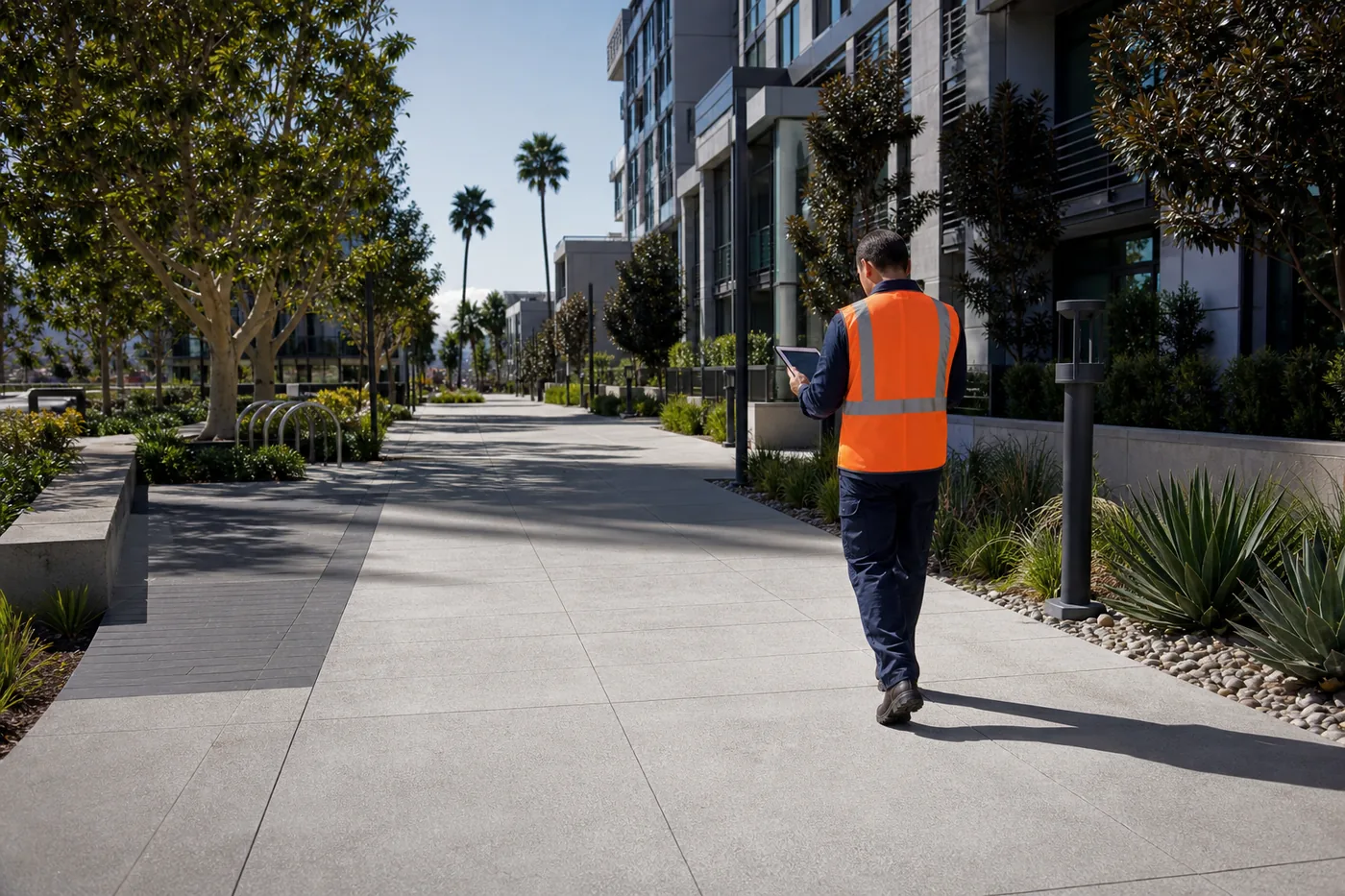
A portfolio manager can use the same documentation format across locations. Consistent records make it easier to group similar concerns, plan site visits, and avoid losing the history of recurring areas during staff or vendor transitions.
Repair, grinding, leveling, or replacement?
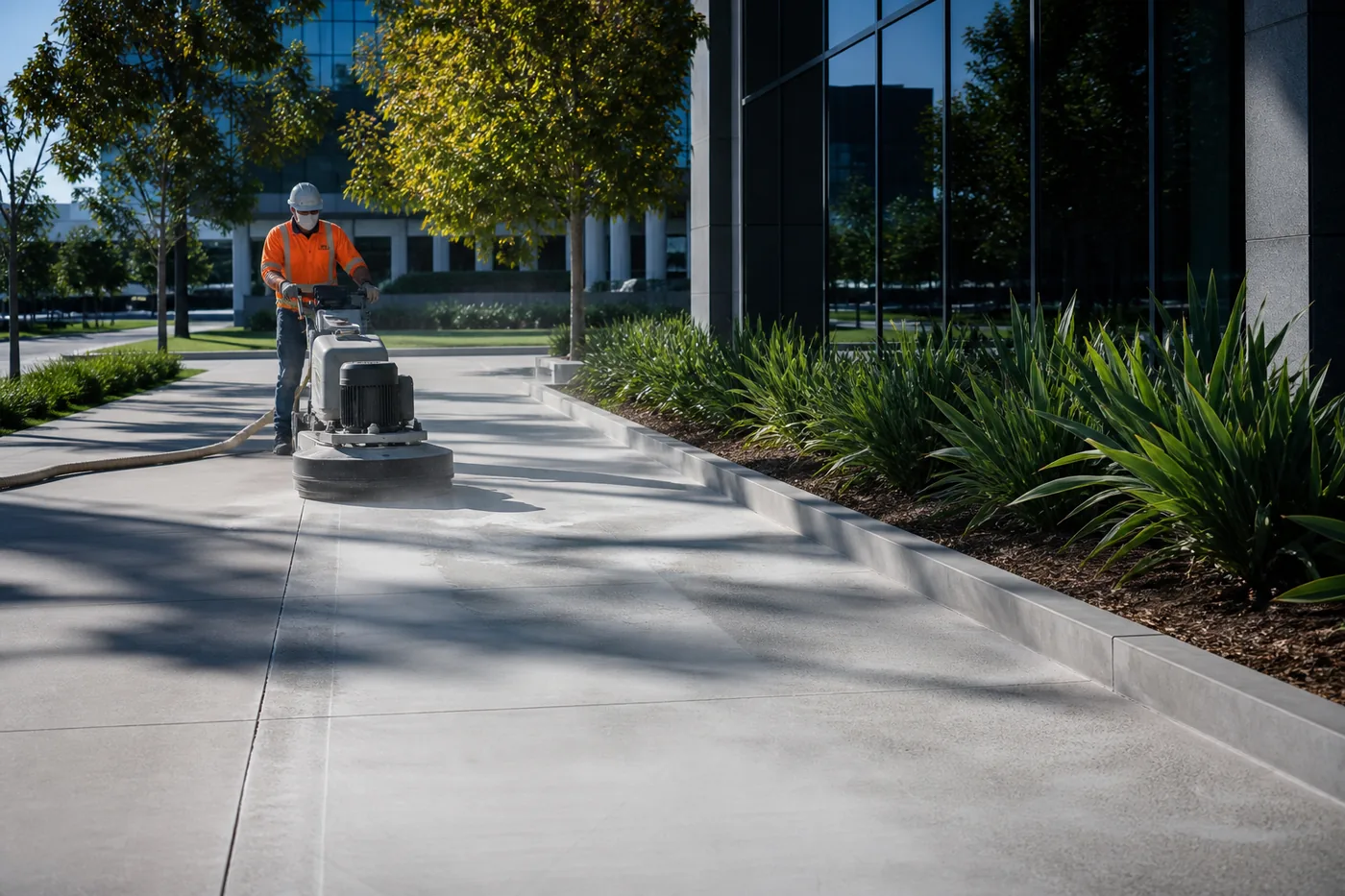
Commercial trip-hazard elimination is not one universal process. Certain raised transitions may be candidates for grinding when the slab and surrounding conditions support it. Some settled slabs may prompt a leveling discussion. Broken or extensively deteriorated concrete may require repair or replacement. Other causes may call for additional investigation before concrete work begins.
The right option depends on the amount and pattern of movement, concrete condition, route function, adjacent features, accessibility context, expected appearance, project life-cycle goals, and whether the underlying concern has been identified. Commercial Pavement Group does not claim here that a particular method is available or appropriate without a project discussion.
Accessibility and legal considerations
Trip-hazard and accessibility conversations can overlap, especially along routes connecting parking, public sidewalks, entrances, amenities, and common areas. Applicable accessibility requirements can vary based on the property, jurisdiction, and standards involved. A physical repair does not by itself establish or guarantee legal compliance.
The ADA sidewalk accessibility service page provides a careful overview of the physical service context. Existing accessibility reports, drawings, or professional recommendations should be shared when they are relevant to a proposed project.
How professional evaluation supports a better decision
A professional evaluation can connect a visible condition to feasible response options. The conversation may consider whether the surface is stable, whether the concrete can support a localized treatment, how the route will operate during work, and whether related areas should be included in the same scope.
For a focused concern, begin with commercial trip-hazard elimination. Broader damage may fit a commercial sidewalk repair discussion. A contractor should explain assumptions and exclusions so the property team understands what the proposed work does and does not address.
Compare proposals on scope, not price alone
Two proposals may use different quantities, methods, work areas, access assumptions, or restoration expectations. Ask each provider to identify included locations, preparation, treatment or replacement approach, debris handling, site protection, schedule, access needs, exclusions, and how unforeseen conditions will be addressed.
A manager may also need to coordinate tenant notices, pedestrian detours, parking changes, inspections, or other contractors. The lowest number is not directly comparable when the scopes are materially different. Clear documentation helps procurement teams evaluate whether proposals respond to the same property need.
Build trip hazards into ongoing property planning
Once known areas are addressed, retain photographs, scope documents, and completion information with the property record. Continue observing surrounding walkways through the property’s normal maintenance process. Recurring conditions may justify a broader review rather than repeated isolated work.
The best time to seek help is before uncertainty turns into inaction. A clear location list and site context allow the appropriate professionals to discuss urgency, possible methods, and next steps without making unsupported promises about outcomes or liability.
Plan temporary access and communication
When an area is awaiting evaluation or scheduled work, the property team may need to follow its established procedures for access, notices, and temporary precautions. Decisions should reflect the actual site and appropriate professional guidance. A generic warning sign or cone should not be assumed to resolve a condition or satisfy an obligation.
For approved construction, identify who uses the route, where an alternate path could operate, how deliveries or mobility needs will be handled, and who will communicate changes. The contractor and property representative should agree on work limits and reopening expectations before the area is taken out of service.
Close the loop after the project
Completion review should confirm which listed areas were addressed and which remain outside the scope. Retain photographs, approved changes, contractor documentation, and any recommendations requiring another discipline. Avoid relabeling the entire property as “hazard free” based on a limited project.
Continue observing surrounding walkways through the normal maintenance process. If displacement returns or adjacent panels change, the property may need to revisit supporting conditions or seek broader technical input. A well-kept history allows future decision-makers to understand the sequence without relying on memory.
Key takeaways
- Start with the property, route, and observed condition rather than a predetermined method.
- Document locations, photographs, use, history, and operating constraints clearly.
- Use qualified legal, accessibility, design, or technical professionals when the subject exceeds a pavement contractor’s role.
- Compare proposals by scope, assumptions, exclusions, coordination, and method—not price alone.
- Confirm final recommendations, availability, schedule, and commercial terms directly.