Hazard awareness
Bring uneven surfaces into a documented property-maintenance conversation.

Commercial Service · Los Angeles
Small elevation changes can become significant maintenance concerns on heavily used commercial walkways. Commercial Pavement Group helps Los Angeles property teams identify and discuss uneven pedestrian surfaces within a broader site-maintenance context.
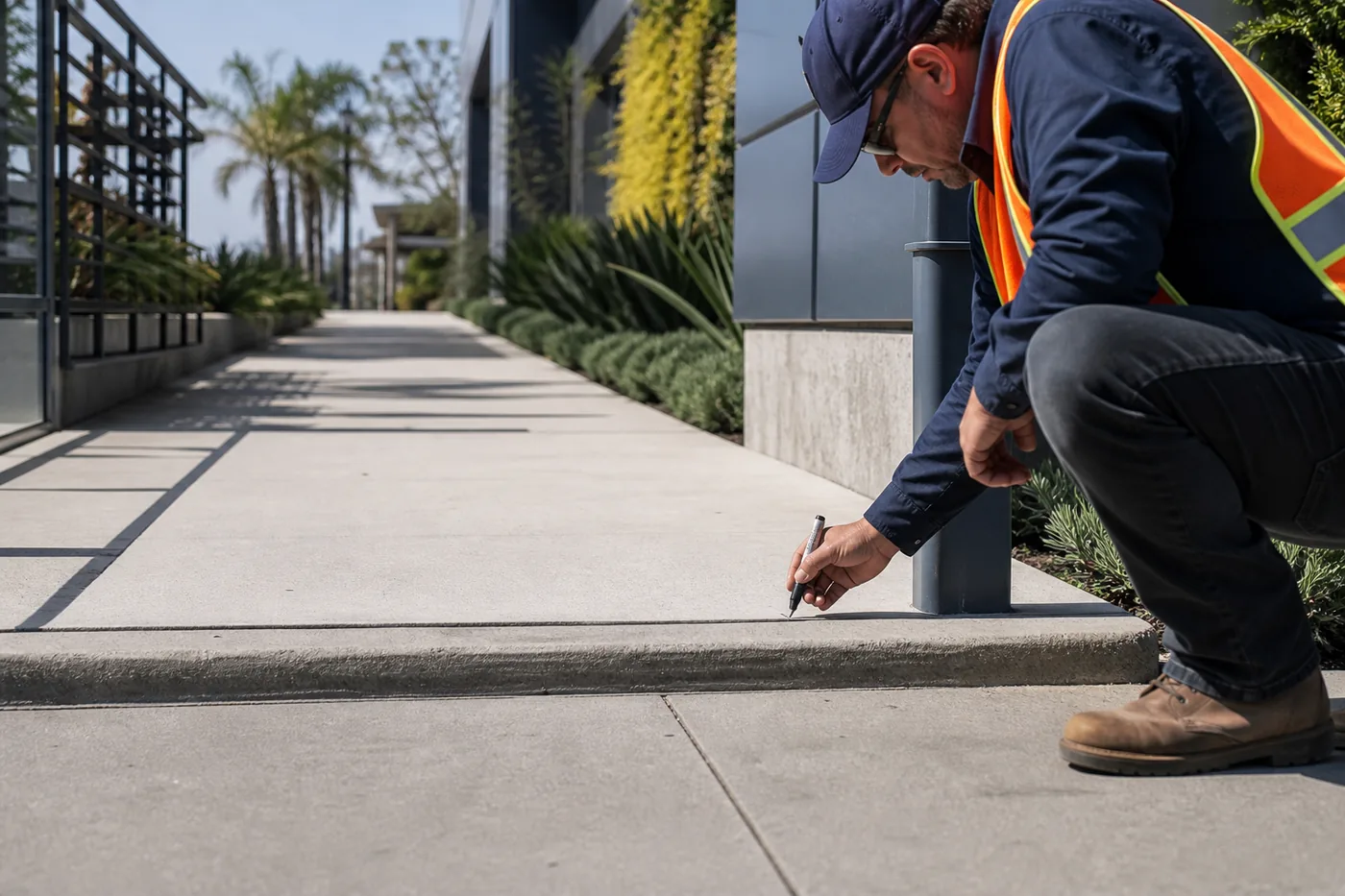
The commercial challenge
Raised edges, settled slabs, abrupt transitions, and damaged concrete can affect pedestrian movement and the professional condition of a property.
Addressing a visible hazard may help support safer circulation, but no physical repair can be described as eliminating all risk or legal liability.
Service approach
The location, height and shape of the transition, concrete condition, route use, and adjacent elements all matter. Depending on the facts, a property team may need to discuss repair, grinding, leveling, replacement, or another option.
Commercial Pavement Group focuses the conversation on the observed condition and commercial property needs without promising an unverified method or legal outcome.
Commercial priorities
The value of the work depends on the actual property condition, chosen approach, and confirmed scope—not unsupported guarantees.
Bring uneven surfaces into a documented property-maintenance conversation.
Support safer, more functional movement through commercial routes.
Consider whether grinding, leveling, repair, or another path warrants review.
Help property teams organize concern areas across larger sites.
Who this serves
Office park sidewalk hazard mitigation starts with documenting locations, route use, elevation changes, surface condition, and operational constraints.
Property liability trip hazard repair is a search phrase often used by commercial buyers, but this service does not provide legal advice or guarantee that a particular repair eliminates liability. Property teams should involve their legal, risk, accessibility, and technical advisers as appropriate.
Read the property manager trip-hazard guideRelated commercial services
Commercial walkway conditions often overlap. These related services provide useful next steps without assuming the same method applies everywhere.
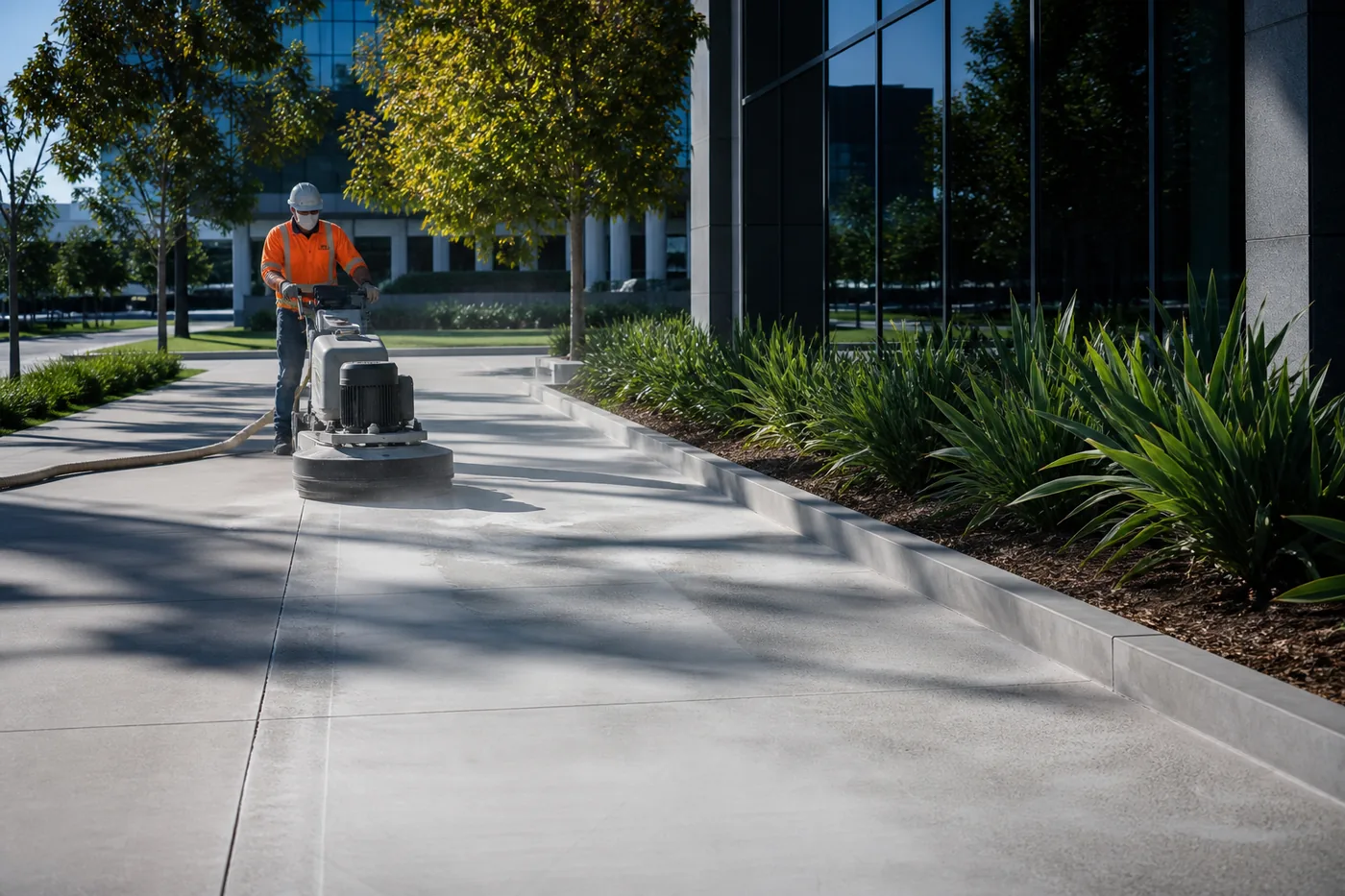
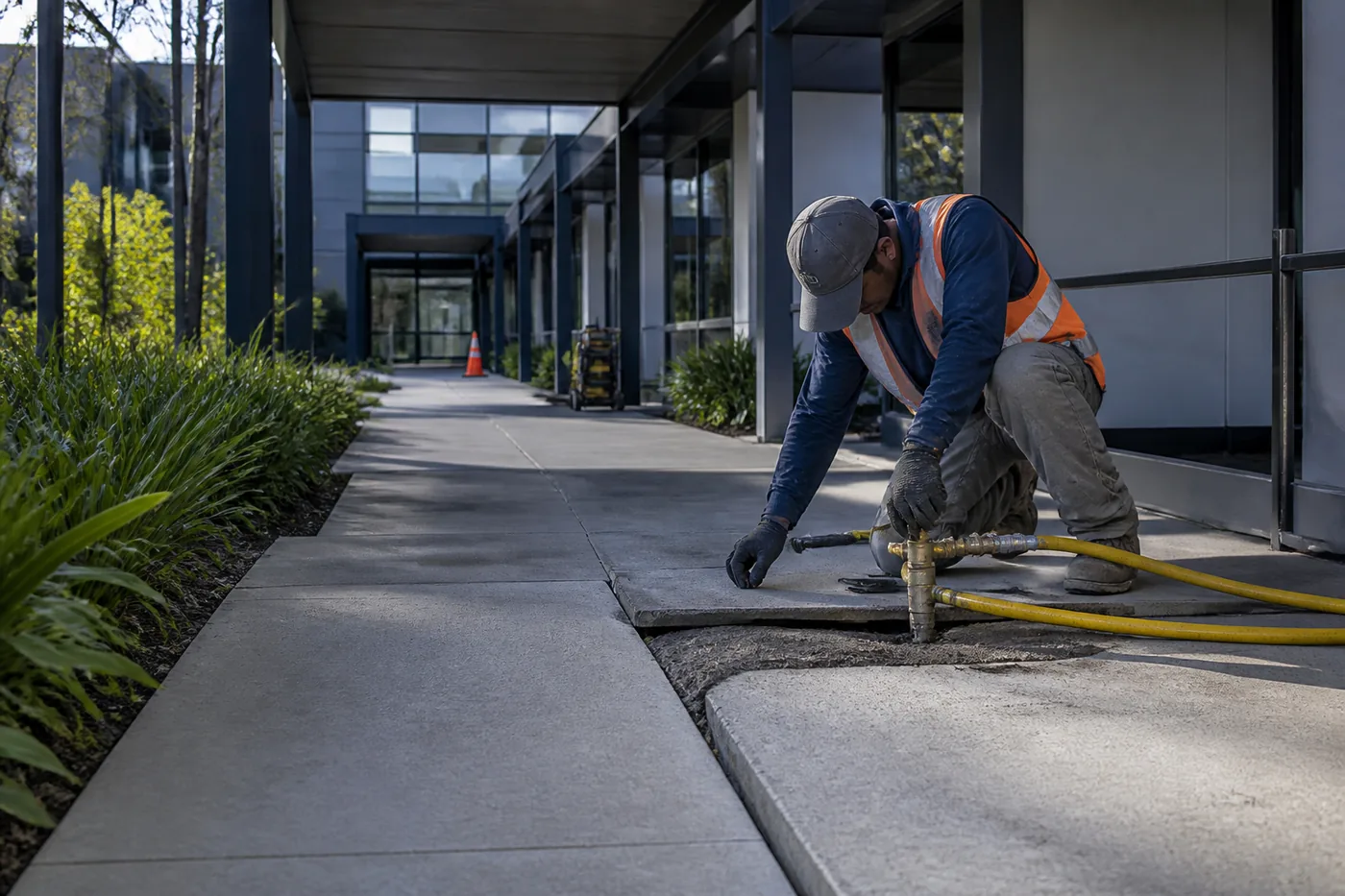
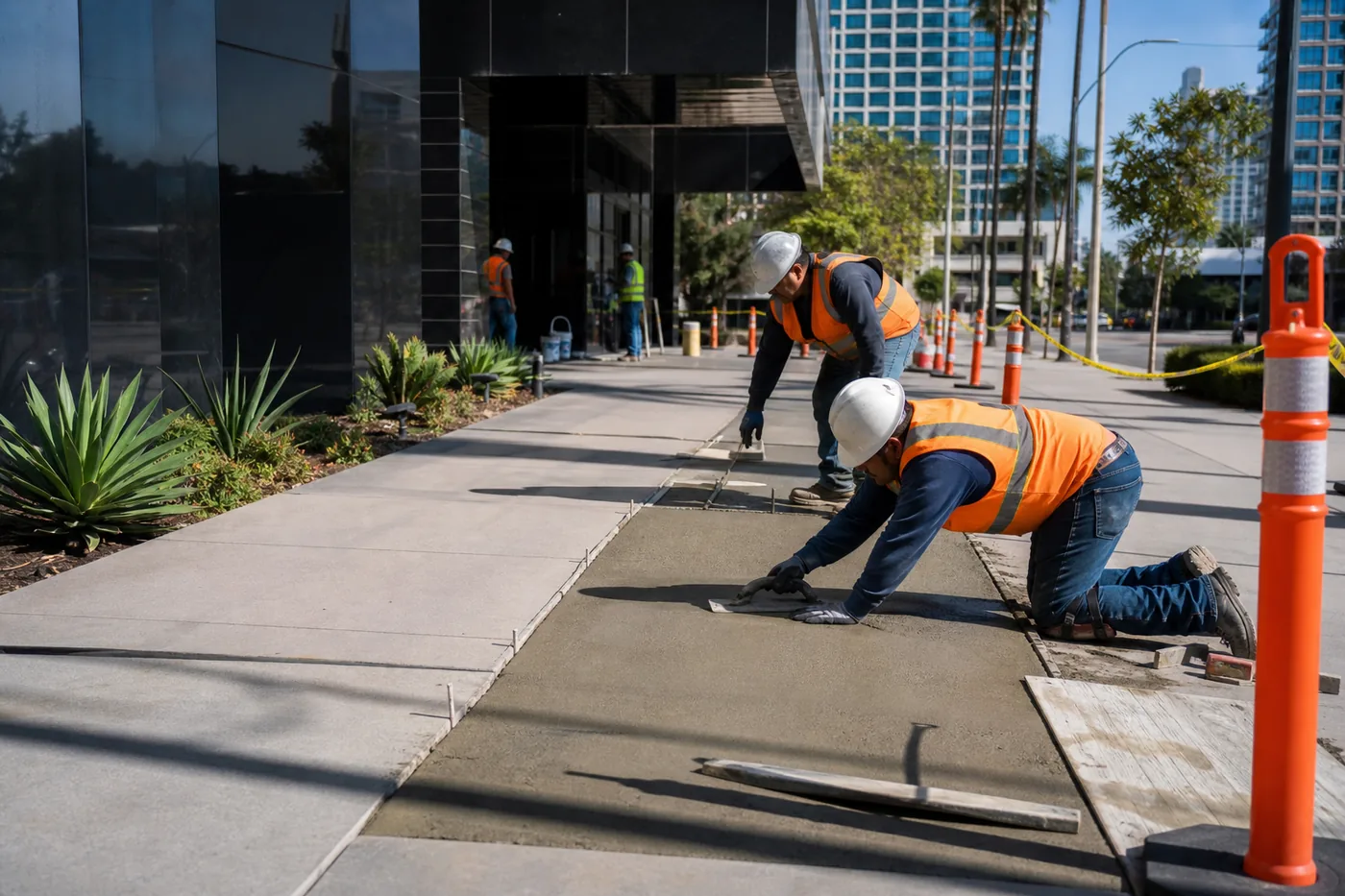
Los Angeles commercial focus
Los Angeles commercial sites balance heavy pedestrian use, visible public interfaces, accessibility, property operations, and diverse stakeholders. Project discussions should reflect that local context without making unverified claims about surrounding service areas.
Service FAQ
These answers provide general project guidance. Pricing, methods, scheduling, availability, and technical recommendations require a direct discussion.
The term commonly describes an abrupt change, raised edge, settlement, or damaged area that may interfere with normal pedestrian movement. A site-specific review is needed to understand the condition.
No absolute legal or liability claim is made. Physical improvements may help address hazards, but property owners should seek qualified legal advice for liability questions.
The answer depends on the transition, slab condition, surrounding site, access needs, and project goals. No single method is appropriate for every condition.
Discuss the property
Share the property type, location, observed condition, and available project information with Commercial Pavement Group.