Commercial sidewalks are part of a property’s daily operating environment. Residents, tenants, employees, customers, vendors, and visitors may use the same routes throughout the day, which means small surface changes can become visible maintenance concerns. Property managers do not need to diagnose every condition themselves, but they benefit from a consistent way to observe, record, and prioritize what is happening across the site.
A useful commercial sidewalk maintenance process starts with the property rather than a universal calendar. Traffic, age, nearby landscaping, drainage, previous work, site layout, and stakeholder expectations can all influence what deserves attention. No single inspection frequency or repair method fits every property. The goal is to build reliable information for a professional project discussion.
Start with the routes people use most
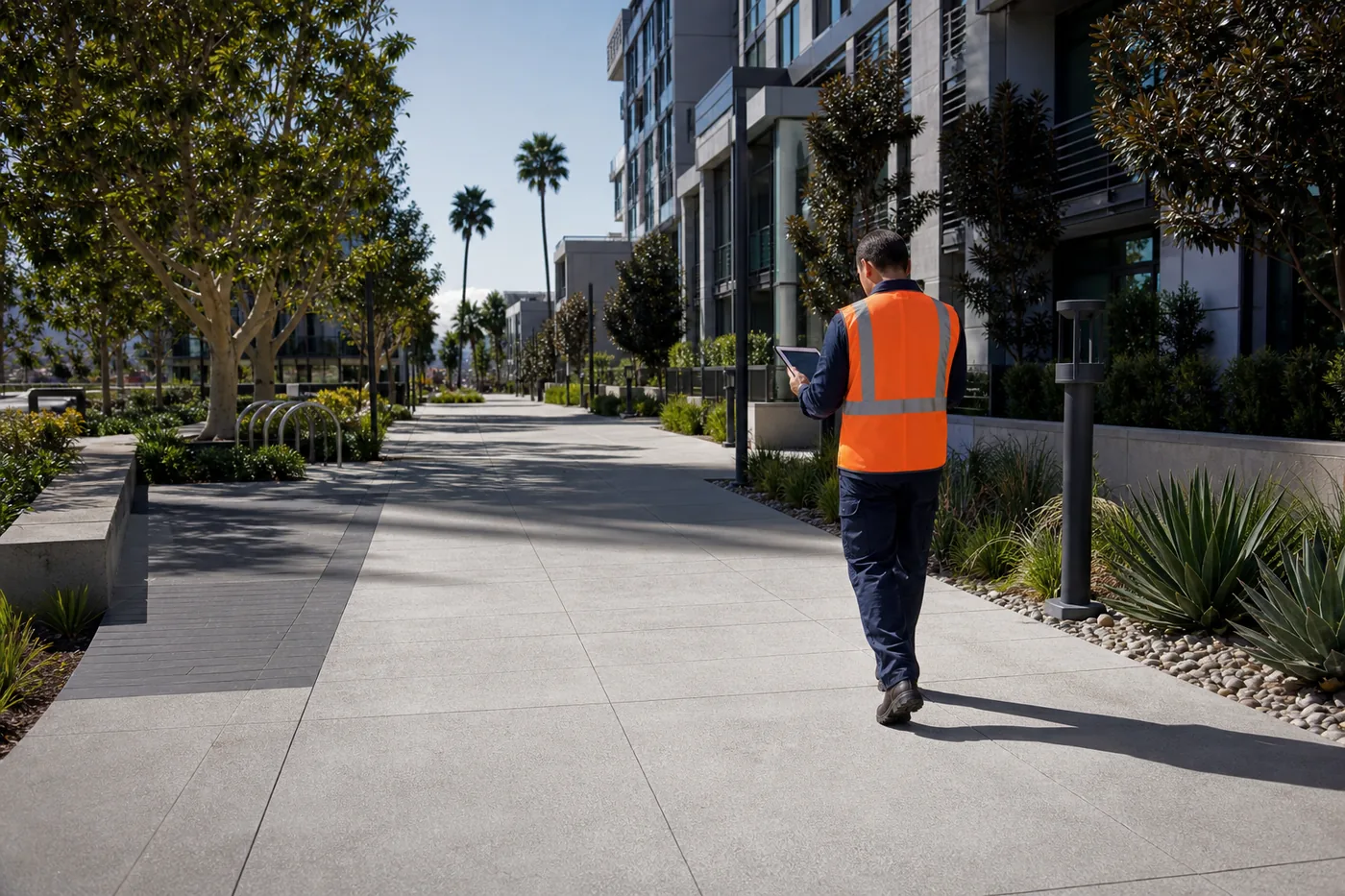
Begin by identifying how people move between parking areas, building entrances, shared amenities, loading areas, public sidewalks, and other destinations. Main pedestrian routes often deserve closer attention because a condition there may affect more people and create a more visible property issue. Secondary routes still matter, but usage can help a manager organize review priorities.
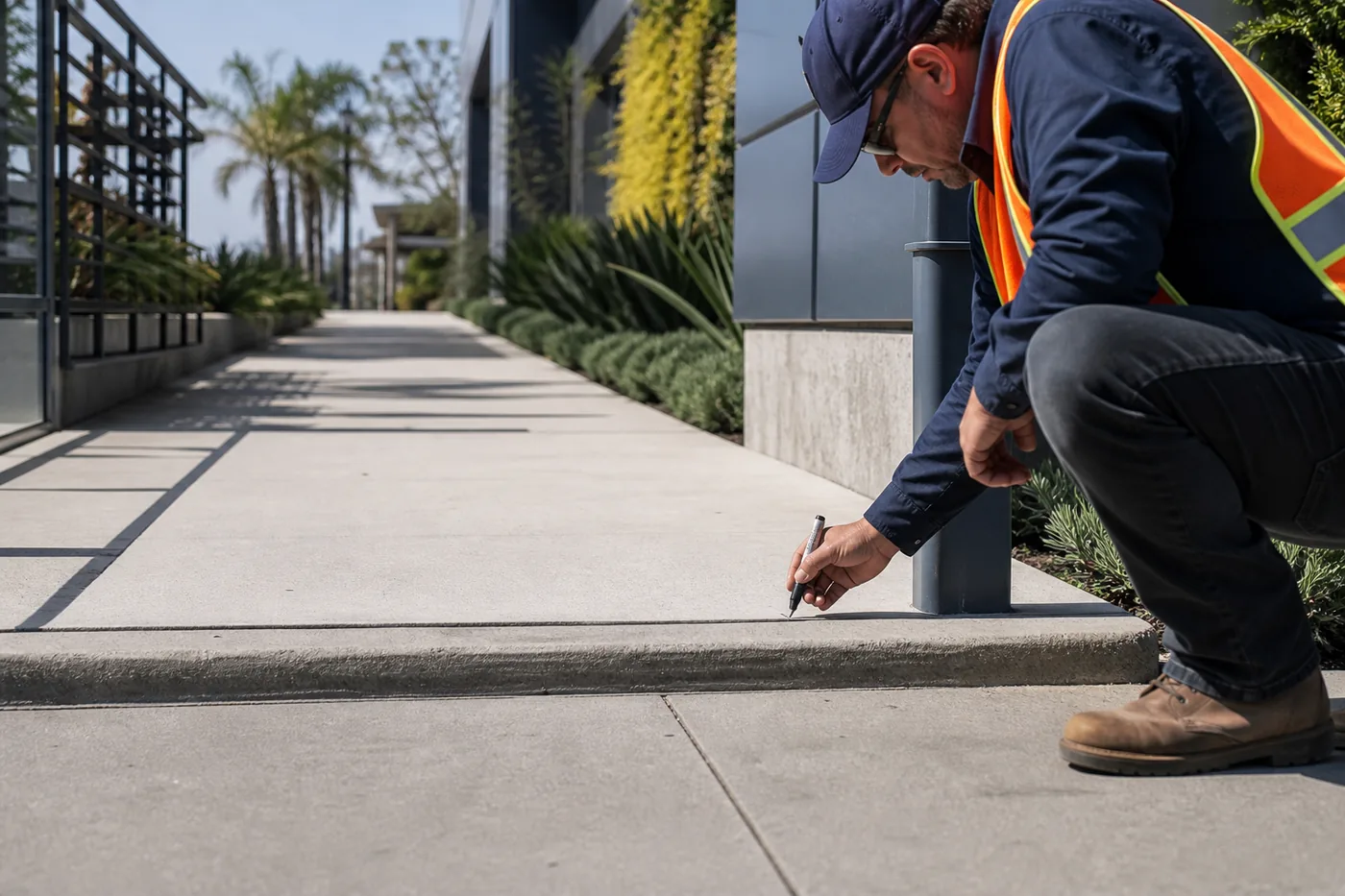
Property maps, site plans, or simple annotated aerial images can make observations easier to communicate. Assigning a location code to each building, walkway segment, or concern area reduces ambiguity when several stakeholders are involved. A photograph labeled “Area B-4 near the east lobby” is more actionable than a photo without context.
Conditions worth documenting
Uneven surfaces and abrupt transitions
Adjacent slabs may settle, lift, rotate, or wear differently. The result can be a noticeable change in elevation or a rough transition along a walking route. A property manager can record the location, direction of travel, surrounding surface condition, and whether the change appears to be developing. A professional should determine whether repair, grinding, leveling, replacement, or another response is appropriate.
Cracks and deteriorated concrete
Cracks vary in pattern, width, depth, and surrounding condition. Some remain visually limited while others occur with movement, spalling, broken edges, or broader slab deterioration. Rather than assuming that every crack requires the same treatment, document what is visible and how the area functions. This gives a commercial sidewalk repair provider useful information before a site review.
Trip-hazard concerns
A raised edge, broken corner, displaced panel, or other abrupt surface change can affect a pedestrian route. High-traffic locations, entrances, ramps, and areas used in low light may deserve prompt attention. Addressing a surface concern may help reduce risk, but no repair automatically eliminates liability. Property owners should consult appropriate legal or accessibility professionals regarding their obligations.
Drainage and recurring moisture observations
Standing water, concentrated runoff, irrigation overspray, and persistent dampness can be useful context even when the sidewalk itself is the immediate concern. Pavement work should not be treated as a substitute for drainage design or investigation. Recording when and where moisture appears can help the project team identify whether another discipline may need to participate.
Accessibility belongs in the maintenance conversation
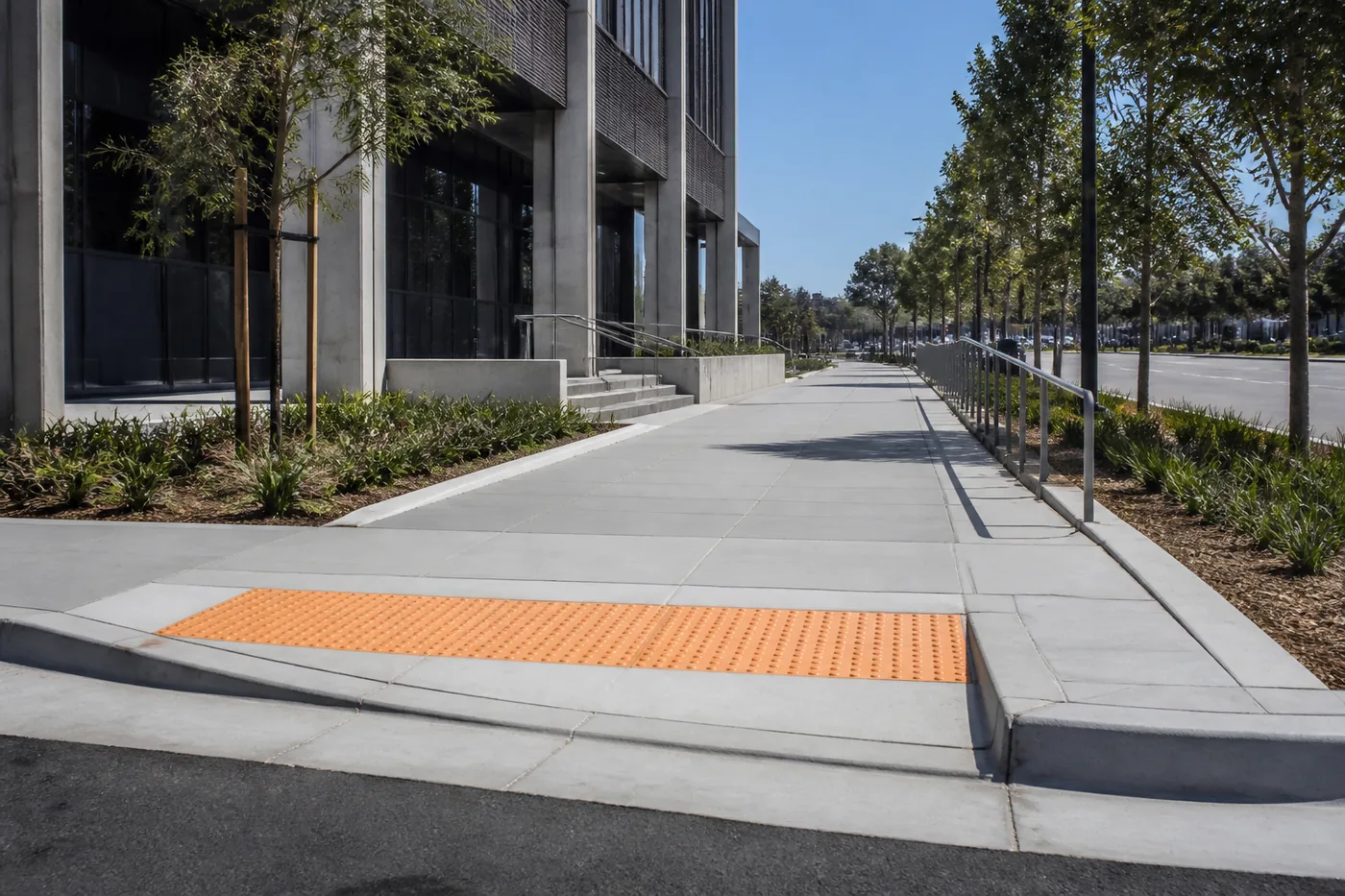
Accessible pedestrian routes may include sidewalks, curb ramps, landings, transitions, and connections between parking and building entrances. Uneven surfaces, damaged areas, constrained clear space, or changes at ramps can raise accessibility questions. Applicable requirements can depend on the property, jurisdiction, and standards involved.
General website information cannot determine compliance for a specific site. When accessibility is a concern, property managers should coordinate with qualified professionals and provide any existing assessments or plans. Commercial Pavement Group’s ADA sidewalk accessibility information explains the service context without offering legal advice or a compliance guarantee.
Build a useful sidewalk condition record
A condition record does not need to be complicated. Consistency matters more than elaborate software. For each observation, capture enough information for another person to find and understand the area:
- Property name, address, and internal location reference
- Date observed and the person or team recording it
- Wide-context and close-up photographs
- Visible condition and nearby features
- Pedestrian use, access, or operating considerations
- Whether the concern is new, recurring, or previously addressed
- Any known plans, reports, or stakeholder requests connected to the area
Avoid stating technical conclusions that have not been verified. “Raised transition between two panels” is more neutral and useful than assigning a cause without evaluation. This distinction helps procurement and facilities teams compare observations with later professional recommendations.
Prioritize without relying on a universal formula
Managers often balance urgent concerns, planned capital work, resident or tenant communication, appearance, accessibility, and budget cycles. A practical first pass may separate areas requiring prompt professional review from conditions that can be tracked and broader zones that may be candidates for a coordinated maintenance project.
Prioritization should remain property-specific. A small condition at a primary entrance may carry a different operational impact than a larger condition in a restricted area. Accessibility routes, emergency access, events, seasonal traffic, and scheduled improvements can also affect sequencing. Technical, legal, or safety-sensitive decisions should be made with the appropriate professionals.
Think beyond a one-time repair
Repeated issues in the same zone may signal that the property needs a broader conversation. The response could involve additional concrete work, site investigation, drainage review, tree or landscape coordination, accessibility planning, or replacement rather than another isolated treatment. The cause cannot be determined from a generic article or photograph alone.
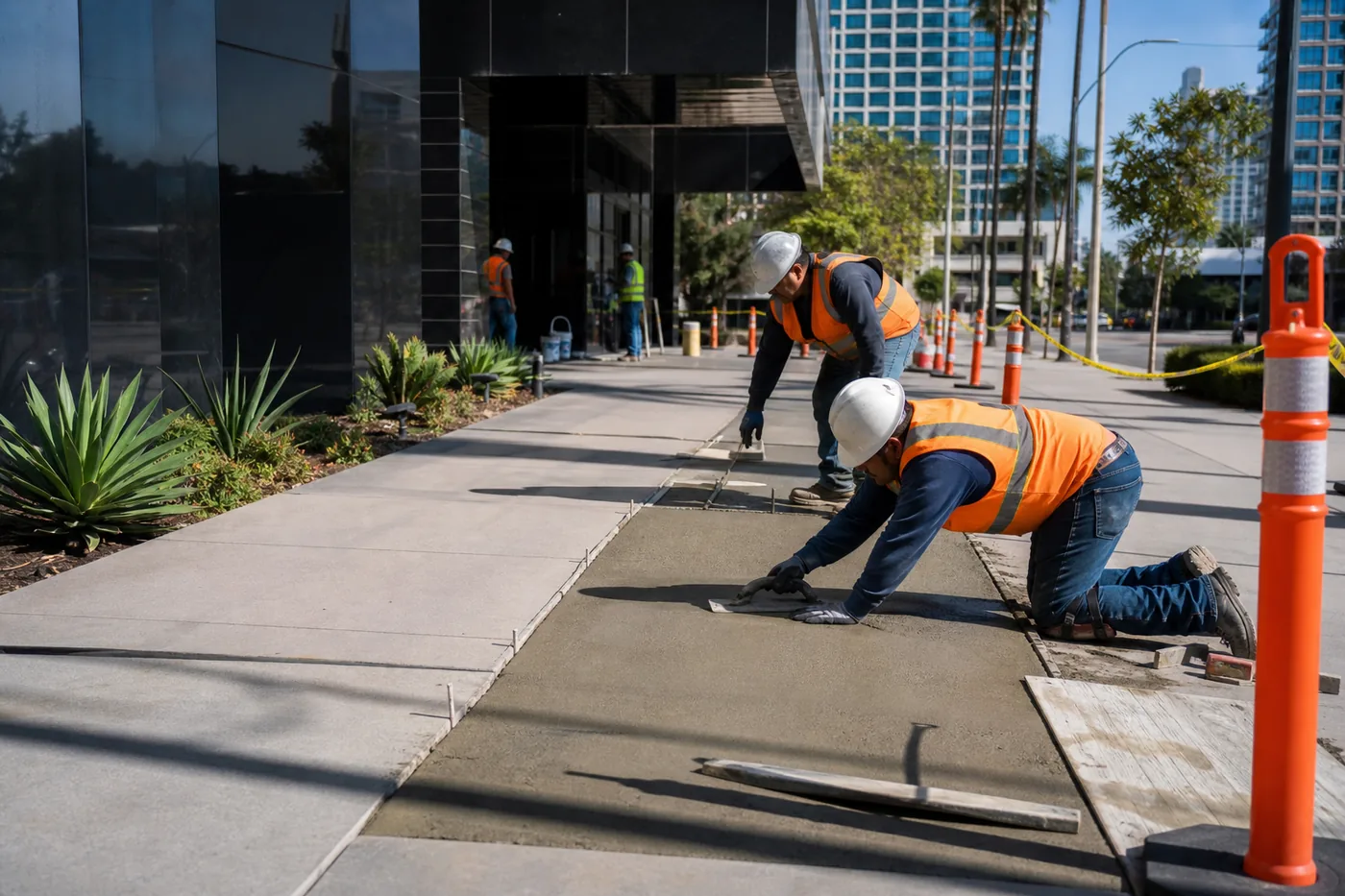
A commercial sidewalk maintenance discussion can organize multiple areas or properties, while commercial sidewalk repair focuses on damaged or uneven walking surfaces. Where an abrupt transition is the primary concern, review the trip-hazard service pathway.
Prepare for a contractor conversation
Before requesting a proposal, gather the property address, concern-area list, photographs, available plans, desired timing, access limitations, stakeholder requirements, and procurement instructions. Explain whether the request covers one location, a defined group of repairs, or a broader portfolio conversation. This helps contractors understand the expected level of coordination.
Ask proposals to describe included areas, exclusions, assumptions, site-access expectations, scheduling considerations, and how changes will be communicated. Avoid comparing only a bottom-line number when scopes differ. The appropriate method, final quantities, schedule, commercial terms, and availability should be confirmed through direct evaluation and documentation.
When professional evaluation may be appropriate
Seek professional input when the cause is unclear, movement appears active, the walking surface presents an immediate concern, accessibility questions are involved, multiple treatments may be possible, or the condition interacts with structures, utilities, drainage, or landscaping. Other specialists may be needed depending on the site.
Commercial sidewalk maintenance is most useful when it turns scattered observations into an organized property decision. Clear records, thoughtful priorities, and a defined contractor conversation help managers move from “something looks wrong” to a scope that the right professionals can evaluate.
Coordinate maintenance across multiple stakeholders
Commercial sidewalk decisions often involve more than the person who first observes the condition. Ownership, property management, facilities, association boards, tenants, residents, risk teams, procurement, and consultants may each need different information. A concise condition log and clearly labeled scope give those groups a common reference and reduce repeated site interpretation.
Establish who approves priorities, who can authorize access, who communicates with occupants, and who maintains the final record. For portfolio work, decide whether proposals should be organized by property, priority, method, or budget phase. This structure helps stakeholders review options without presenting preliminary observations as technical conclusions.
Review outcomes and update the property record
After work is completed, compare the approved scope with the locations addressed. Store dated photographs, contractor documentation, changes, exclusions, and any areas deferred for later review. If a treatment was limited to one symptom, note that limitation so future teams do not assume a larger condition was resolved.
Maintenance records become more valuable over time. They can show whether a location remains stable, whether similar issues appear elsewhere, and whether isolated work should become a coordinated project. The record is not a warranty or inspection certification; it is a practical tool for continuity and better property conversations.
Key takeaways
- Start with the property, route, and observed condition rather than a predetermined method.
- Document locations, photographs, use, history, and operating constraints clearly.
- Use qualified legal, accessibility, design, or technical professionals when the subject exceeds a pavement contractor’s role.
- Compare proposals by scope, assumptions, exclusions, coordination, and method—not price alone.
- Confirm final recommendations, availability, schedule, and commercial terms directly.