When a commercial sidewalk is cracked, uneven, broken, or deteriorated, property owners often ask whether the area can be repaired or needs replacement. The answer is rarely determined by appearance alone. Concrete condition, movement, route function, accessibility, surrounding features, operating needs, and life-cycle goals all influence the decision.
Repair and replacement are broad categories, not single methods. A localized surface treatment, grinding, leveling, partial repair, panel replacement, or larger reconstruction may each address different conditions. A professional evaluation should connect the visible issue to a suitable scope rather than forcing every property into the same response.
Begin with the extent and pattern of damage
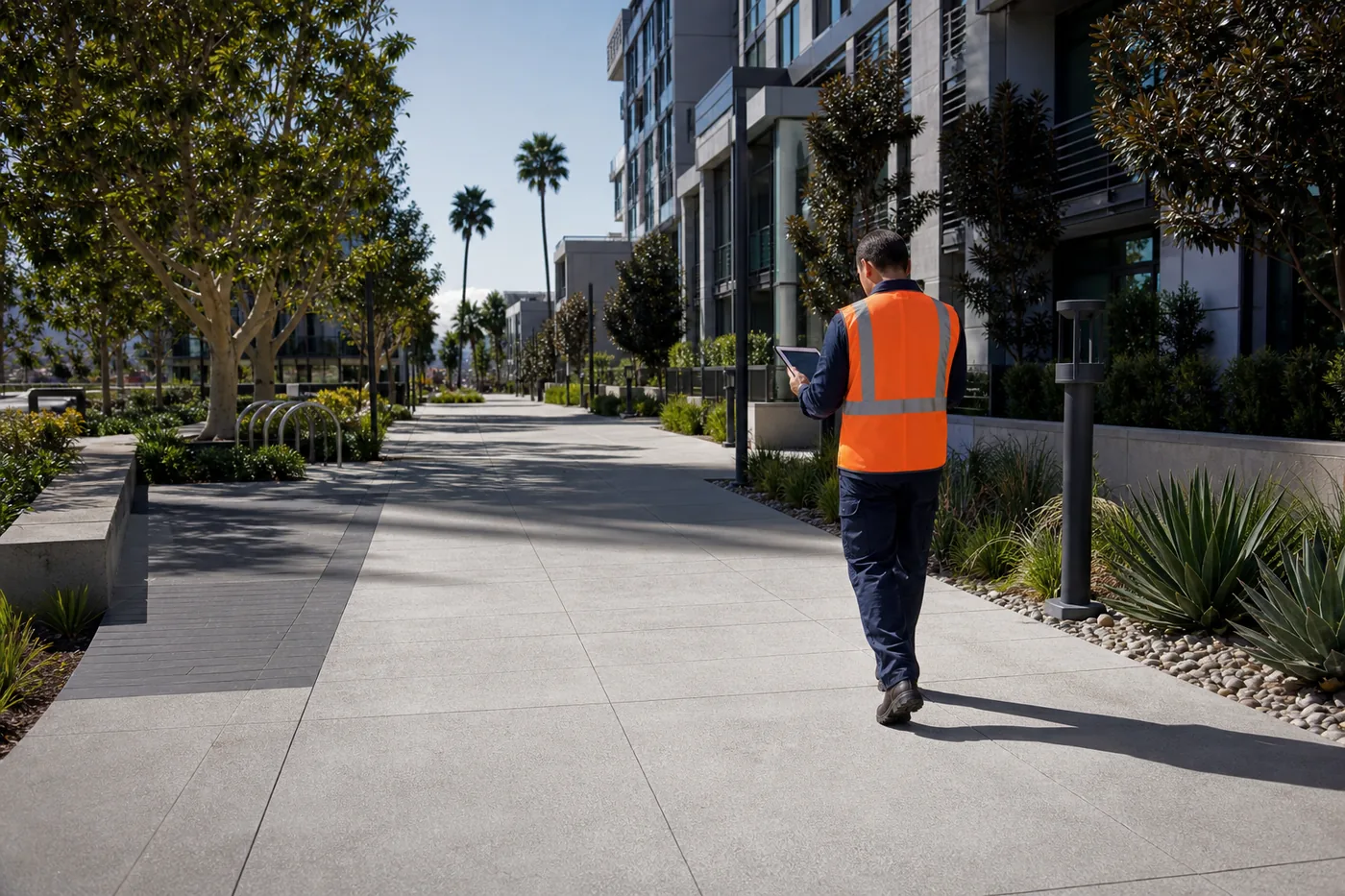
A small isolated defect presents a different question from widespread cracking, multiple displaced panels, or deterioration extending across a route. Map the affected area and look for patterns. If several adjacent slabs show similar movement, the project may need a broader investigation than one spot repair.
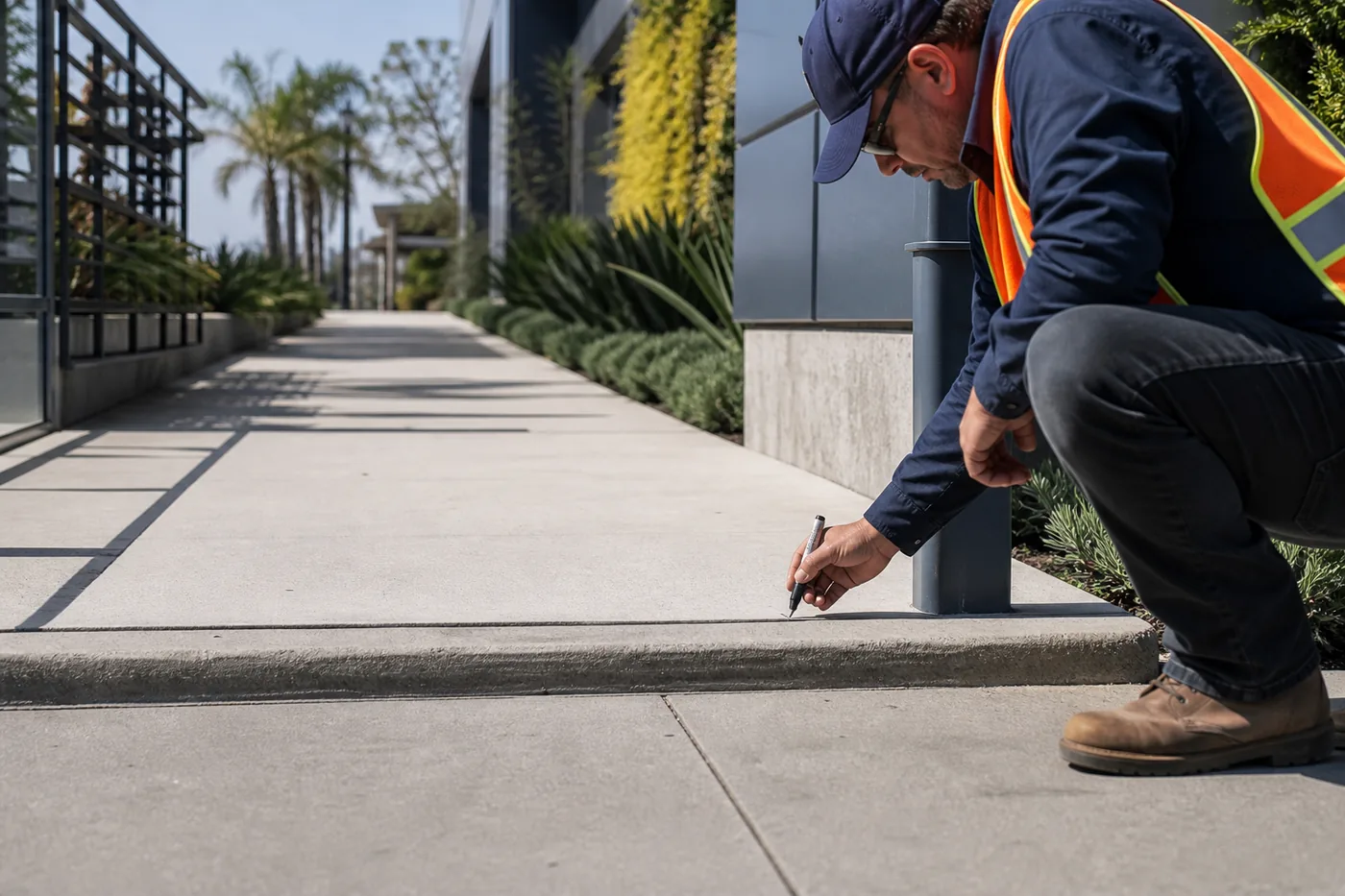
Photographs should include both details and surrounding context. Note whether deterioration affects only the surface or appears with broken edges, exposed material, rocking, settlement, or changes at joints. These observations do not replace technical evaluation, but they help the contractor understand what to examine.
Consider the concrete that remains
A repair depends partly on the condition of the concrete receiving or surrounding it. Sound material may support certain localized approaches, while extensively fractured or deteriorated concrete may not. Appearance expectations also matter at entrances, retail environments, and other highly visible areas where a patch may contrast with the existing surface.
Ask how the proposed treatment relates to the remaining slab, adjacent panels, and expected use. A responsible proposal should state its assumptions and avoid promising performance that cannot be supported without site-specific information.
Look at movement and possible causes
Sidewalk movement may be influenced by soil conditions, roots, water, adjacent structures, loading, utility work, erosion, or other factors. A concrete contractor may identify visible clues, but some causes require input from additional professionals. Replacing a panel without considering an active underlying issue may not address the broader concern.
Property teams should share previous repair records, photographs, drainage observations, landscape information, and known site work. When the cause is uncertain or movement appears ongoing, evaluation may need to precede method selection.
How route function changes the decision
A sidewalk is part of a circulation system. Main entrances, accessible routes, loading paths, courtyards, school or healthcare environments, and residential common areas each create different operational needs. Work near a critical entrance may require phasing or temporary access that affects the practical choice between treatments.
High pedestrian use can influence scheduling, protection, communication, and the tolerance for repeated disruption. A localized repair may reduce immediate work limits, while a coordinated replacement project may address several concerns in one mobilization. Neither is universally better.
Accessibility and trip-hazard considerations
Uneven surfaces and abrupt transitions can affect walking routes. Where accessibility is involved, the property should coordinate with qualified professionals regarding applicable requirements. A repair may improve a surface without establishing that the entire route complies with legal or technical standards.
Document ramps, landings, slopes, entrances, parking connections, and material transitions near the proposed work. This context can help the project team avoid treating one panel in a way that conflicts with the larger route.
When repair may be considered
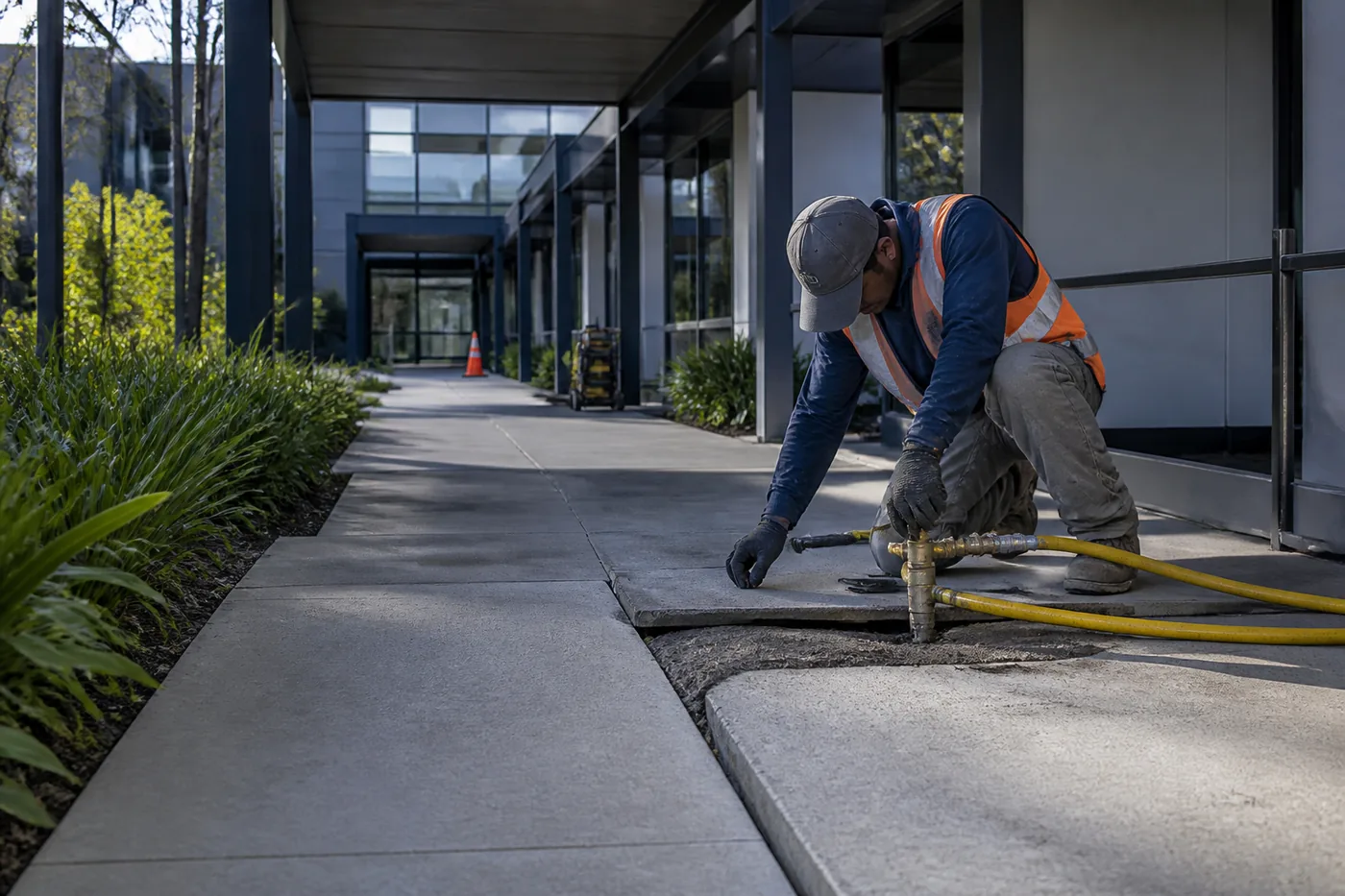
A localized repair may be considered when the concern is limited, the surrounding concrete is suitable, the cause and method are reasonably understood, and the treatment aligns with property expectations. Examples could include addressing a specific damaged edge, localized surface deterioration, or a transition suitable for an approved treatment.
“Repair” should not be interpreted as a generic promise. Ask exactly what material or area will be altered, how adjacent surfaces will be handled, what appearance to expect, and what conditions are excluded. No particular method is claimed as a verified Commercial Pavement Group offering until discussed directly.
When replacement may be considered
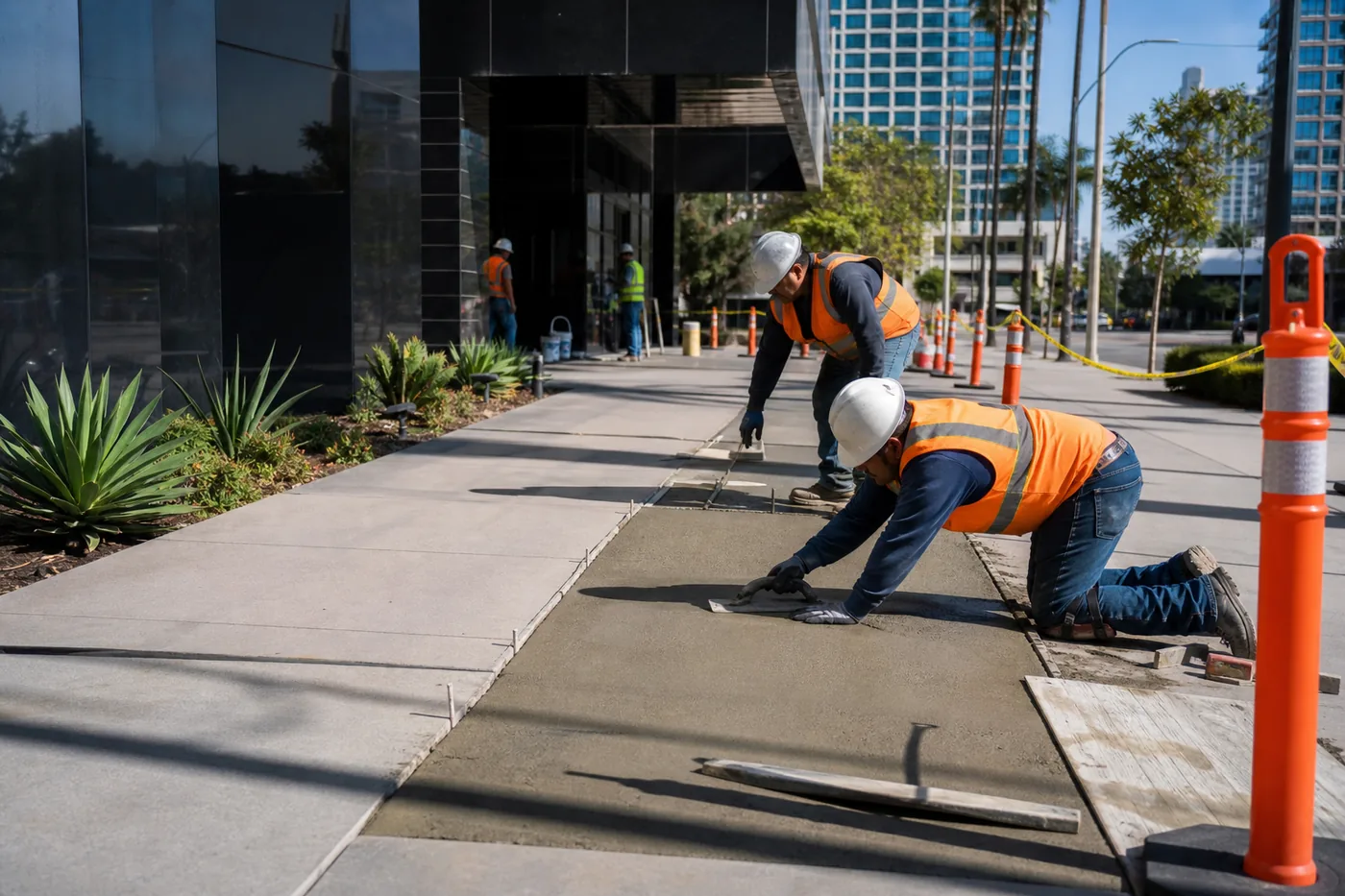
Replacement may enter the conversation when concrete is extensively broken, multiple defects affect the same slab, geometry must change, prior repairs are no longer suitable, the route requires reconstruction, or the desired life-cycle and appearance support a new panel. Larger replacement scopes may also coordinate multiple adjacent areas.
Replacement creates its own planning needs: limits of demolition, adjacent restoration, reinforcement or design requirements where applicable, curing and access, debris handling, utility interfaces, and protection of surrounding property. These details should be defined rather than assumed.
Cost and scope without arbitrary pricing
Online unit prices cannot reliably describe a commercial project. Quantity, access, mobilization, removal, thickness, design, reinforcement, disposal, phasing, site protection, traffic or pedestrian control, finish, and restoration can all affect scope and price. Published generic numbers may exclude important work.
Compare proposals on the same location list and requested outcome. Ask each bidder to separate base scope, alternates, exclusions, and assumptions. If one proposes repair and another replacement, understand the reasoning and expected scope before comparing totals.
Use a decision framework
- Condition: How extensive is the damage and what sound concrete remains?
- Stability: Is movement active or is the cause uncertain?
- Route: How is the area used and is accessibility involved?
- Operations: What access, phasing, or communication is required?
- Appearance: How important is visual consistency?
- Life cycle: Is the goal a localized response or coordinated capital improvement?
- Interfaces: Are drainage, landscaping, utilities, structures, or design professionals involved?
This framework supports discussion; it does not select the method by itself. Site review and verified project requirements remain essential.
Connect the condition to the right service
Start with commercial sidewalk repair when damaged or uneven pedestrian surfaces are the central concern. Where the work extends to other concrete site features, review commercial concrete repair. For recurring or multi-area planning, a sidewalk maintenance conversation may be more useful.
The best decision is the one supported by site conditions, clear scope, appropriate professional guidance, and the property’s operational goals. Repair and replacement are tools; neither should be selected as a slogan.
Account for construction interfaces
Sidewalk work rarely exists in a vacuum. Doors, curbs, ramps, walls, drains, irrigation, utilities, tree wells, pavement, landscaping, railings, and site furnishings may define the practical limits of repair or replacement. A proposal should explain how these interfaces are treated and who is responsible for work beyond the concrete scope.
Where several disciplines are involved, sequence matters. Landscape or drainage work may need to occur before new concrete, while final restoration may follow it. The property team should avoid awarding a narrow scope that cannot be built as described without unresolved adjacent work.
Plan the completion review
Before construction, agree on how completed work will be reviewed against the approved locations and scope. Keep the original condition map, proposal, approved changes, and photographs together. Note any cosmetic expectations and limitations that were discussed rather than assuming new work will match aged concrete exactly.
Deferred areas should remain visible in the property record. Replacement of several panels does not imply that every walkway was evaluated or that future movement cannot occur. Accurate closeout information supports later maintenance and prevents overstatement of the project result.
Ask for a method explanation in plain language
Decision-makers should be able to understand why a contractor recommends a particular approach. The explanation should connect the condition, remaining concrete, route needs, and proposed work without relying only on product terminology. If important assumptions cannot be verified until work begins, they should be identified along with a process for handling discoveries.
Key takeaways
- Start with the property, route, and observed condition rather than a predetermined method.
- Document locations, photographs, use, history, and operating constraints clearly.
- Use qualified legal, accessibility, design, or technical professionals when the subject exceeds a pavement contractor’s role.
- Compare proposals by scope, assumptions, exclusions, coordination, and method—not price alone.
- Confirm final recommendations, availability, schedule, and commercial terms directly.